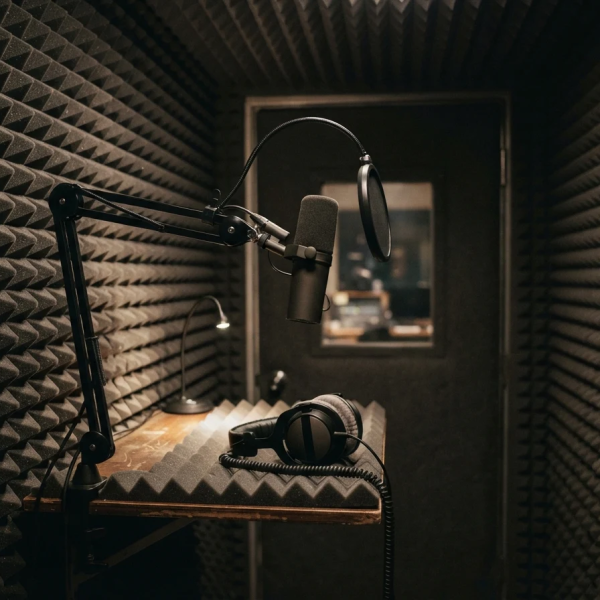
When a company shows a product film, a safety briefing or an e-learning module to audiences in several countries, the words matter as much as the images. Subtitles work well for many viewers, but some situations call for a spoken version in the listener's own language: factory floors where nobody can read a screen, training for drivers, museum audio guides, phone menus and explainer videos for older customers. A good voice over sounds natural, matches the pace of the picture and carries the same tone as the original. A poor one sounds stiff, runs too long or says things the speaker on screen never said. Successful voice over starts with a script written for the ear, not a translation written for the page, and ends with a recording that matches the timing of the video. This article explains how a typical project works and what clients can do to keep cost and quality under control.
Writing a script that can be spoken
Spoken language needs short sentences, clear rhythm and words that are easy to pronounce. When a translator converts a script for voice over, the text often has to be shorter or longer than the literal version so that it fits the time on screen. Numbers, abbreviations and brand names should be written the way they are spoken, with notes for difficult words. Clients who order multilingual voice over should send the video, the original script and a short pronunciation list, because these three items prevent most repeat recordings.
Choosing voices and directing the session
The voice carries the personality of a brand, so choose it with care. Think about age, tone and energy: a calm voice suits compliance training, a bright one fits a consumer app. Listen to short samples in the target language, and ask a native speaker from your team for an opinion. During the recording, a director who speaks the language checks stress, pauses and pronunciation, and asks for another take when a phrase sounds unnatural.
Timing, audio quality and delivery formats
A recording that is a few seconds too long forces cuts in the video, so timing should be checked against the picture before the studio session. Ask for clean audio without background noise, delivered as separate files for each language, with agreed names and levels. Our article on interview transcription shows how written records of spoken material help teams review scripts, track changes and reuse content across languages.
When voice over is better than subtitles
Voice over fits audiences who cannot read while they work, who prefer to listen or who have limited reading skills. Subtitles fit viewers who want the original voice or who watch in silence. Many companies combine both: a voice over for the main language groups and subtitles for smaller markets. Compare your audience, your budget and the place of viewing before you decide.
Casting for different regions
One language can sound very different from one country to another, and listeners notice it at once. Spanish for Mexico is not the same as Spanish for Spain, and English for the United Kingdom differs from English for Australia in vocabulary and rhythm. Decide which market you serve, ask for voices that match the region and check local words, units and examples in the script. This care makes the message feel local instead of imported.
Budget, rights and reuse
Prices depend on the length of the script, the number of voices, studio time and the way the recording will be used. Ask for a quote that states the usage rights, the territory and the duration, because a recording used in a paid campaign costs more than one used inside a company. Keep the raw files, so that updates need only the changed sentences and not a full new session.
Updating recordings when content changes
Product names, prices and rules change, and recordings must follow. Store the final script with the audio and mark each sentence with its time code. When a change comes, the studio replaces only the affected lines and the editor places them in the video. A tidy archive turns a month of work into an afternoon and protects consistency across all language versions.
Testing with real listeners
Before release, play the finished version for two or three people from the target audience and ask what they understood and what sounded odd. Listen on the devices that will be used in real life, such as phone speakers or factory loudspeakers. Small adjustments to volume, speed or wording at this stage cost little and raise the quality of the final product in a visible way.
Where to read more
For a neutral overview of the technique, its history and its uses in film and media, see the Wikipedia article on voice over, which explains how it differs from dubbing.